
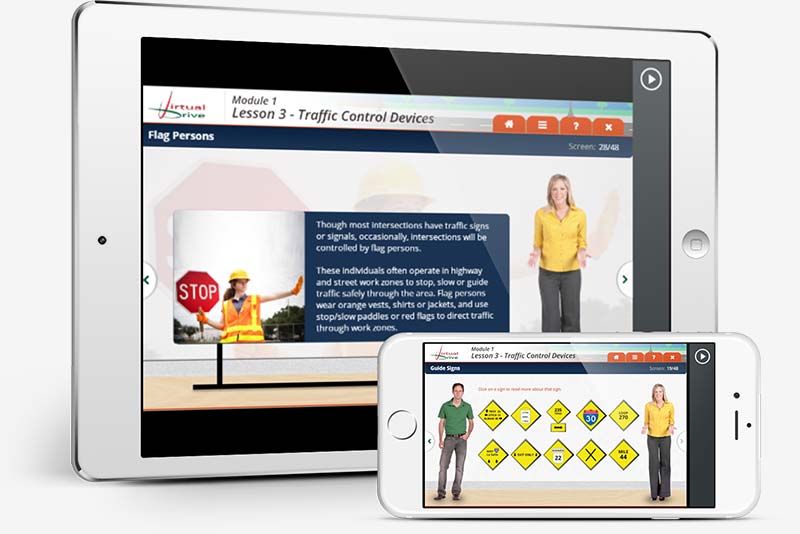
Get your Texas commercial drivers license (CDL) with our online entry-level driver training (ELDT) course from CDL2GO. Our courses are a new national FMCSA requirement that allow you to complete your CDL training online. The Class A Theory course includes:
ADDITIONAL CDL THEORY COURSES
Online CDL Training
On February 7, 2022, the Federal Motor Carrier Safety Administration (FMCSA) began requiring Entry-Level Driver Training (ELDT) for first time Commercial Drivers License (CDL) applicants. The new rule also applies to those who are upgrading an existing Class A or Class B CDL and first time applicants for Passenger (P), School Bus (S) or Hazmat (H) endorsements.
The new FMCSA requirement requires a first time entry-level driver to complete theory training before taking the CDL written test. The training and/or school must be listed on the FMCSA’s Training Provider Registry (TPR). Our online CDL2Go course is listed on the TPR website (click link, then select the “online” tab to verify).
Our online Texas CDL training replaces traditional classroom training. Once you complete your theory training course(s), our system automatically uploads your information and test score to the FMCSA database and will be available immediately in the DPS database so that you can apply for your Commercial License Permit (CLP).
The benefit of our entry-level driving courses is that you can take the classroom portion of your theory training at your own pace in the comfort of your home. As well, this can save you hundreds of dollars and lost time taking a traditional classroom based course.
We have a number of partners we work with to provide behind-the-wheel (BTW) driver training in Texas and can help you find the right local school once you are ready.

What types of CDLs are there?
To obtain a CDL, it will be necessary for you to determine which class you will need. There are three basic classes of CDLs:
Class A
Permits the holder to operate any combination of vehicles with a gross combination weight rating of 26,001 pounds or more, provided the gross vehicle weight rating (GVWR) of the vehicle or vehicles towed exceeds 10,000 pounds.
Class B
Permits the holder to operate any single vehicle with a GVWR of 26,001 pounds or more, any one of those vehicles towing a vehicle that does not exceed 10,000 pounds GVWR, and any vehicle designed to transport 24 passengers or more, including the driver. If the skills test is taken in a bus with a GVWR of less than 26,001 pounds, the holder will be restricted to operating busses under 26,001 pounds GVWR.
Class C
Permits the holder to operate any single vehicle or combination of vehicles that is not a Class A or B if the vehicle is designed to transport 16 to 23 passengers including the driver, or used in the transportation of hazardous materials that require the vehicle to be placarded under 49 CFR, Part 172, Subpart F.
Texas CDL Permit
Applicants for a Texas Commercial Drivers License Permit (CLP) must be at least 18 years of age (for Intrastate) or 21 (for Interstate) years of age. You must complete an entry-level driver training program listed in the FMCSA’s Training Provider Registry (TPR). You will be required to obtain and hold a permit for at least 14 days. The purpose of this is to allow you an opportunity to obtain behind-the-wheel experience before taking your driving test.
A Commercial Learner Permit (CLP) is issued to drivers who are applying to drive a commercial vehicle or modifying an existing commercial driver license. A CLP must be held for a minimum of 14 days prior to being allowed to take the CDL skills test. This applies to original applicants, modifications in grade and adding endorsements which require a skills test.
While operating a commercial motor vehicle with a commercial learners permit (CLP), the applicant must have a licensed CDL operator, with the proper class of license, in the front seat.